
ENGRAM // NEON-KAZE
Neon-Kaze
Run the rooftops at terminal velocity, draw once, and never stop moving.
- Studio
- Shogun-Digital
- Classification
- High-Speed Cyberpunk Parkour / Katana Combat
- Platforms
- PC, Console (Gen-9), Cloud
- Engine
- Kaze-Flux 4 (in-house)
- Filed
- Decrypt Time
- 13 MIN
- Resonance
- 90 / 100
- Operative
- VX_Core Desk
Synaptic Resonance
OVERALL SCORE
90 / 100
The Lore
Shogun-Digital sets Neon-Kaze inside Kasai-9, an arcology stacked forty districts high where the municipal government was quietly dissolved and replaced by a clearing-house of competing security contractors. You play Rei Sasaki, a former courier whose nervous system was reflexed up by a black-clinic ripperdoc and then repossessed when the bill went unpaid. The katana is collateral. The city wants it back.
The narrative is told almost entirely in motion. There are no cutscene corridors; the writers embed exposition into the audio of districts you sprint through — a contract dispute leaking from a noodle stall radio, a debt notice scrolling across a building you are currently running up. Stop to listen and you lose the run. The story is a thing you catch in fragments at speed, which is the most honest design decision in the game.
The Mechanics
The core loop is momentum. A meter called Flux fills while you are moving and drains the instant you touch the ground flat-footed. Every traversal verb — wall-run, vault, grind, slide — feeds Flux, and the katana draws its damage ceiling directly from how full that meter is. A standing attack is a slap. A draw executed at the apex of a forty-metre leap is a one-frame decapitation.
Combat is built around a single rule: one perfect strike beats ten mediocre ones. The katana has exactly one heavy attack and one parry. There is no combo string to memorise. Instead, the depth lives in positioning — where you are, how fast, and at what angle when the blade leaves the sheath. This collapses the usual cyberpunk-action bloat into something closer to a rhythm game played with your whole body.
- Flux momentum meter governs both traversal and damage ceiling
- Single-strike katana: one heavy, one parry, zero combo padding
- Reflex-Boost slow-motion window earned, never regenerated for free
- District contracts re-route patrols dynamically as you complete them
Audiovisual Matrix
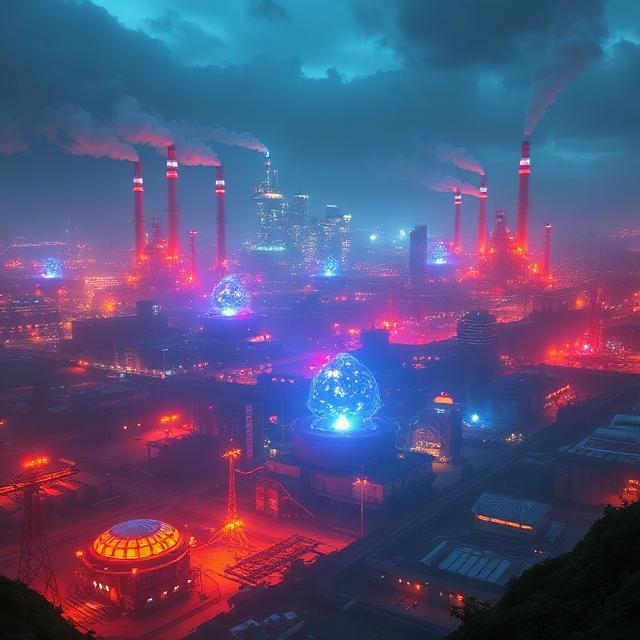
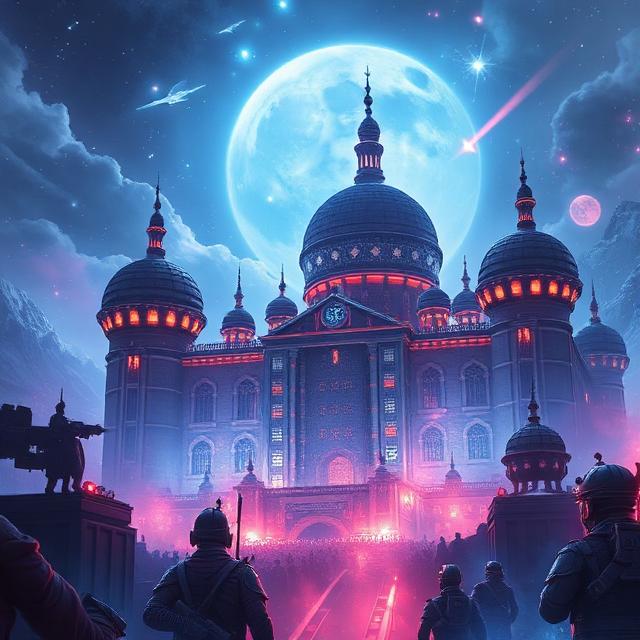
The Kaze-Flux 4 engine renders Kasai-9 as a wet, reflective monolith — every surface is a mirror for the signage, and the signage never repeats because it is procedurally assembled from a contract database that updates as you play. Art direction holds a strict three-value palette per district, which keeps a city of forty thousand light sources legible at 200 km/h.
The score is adaptive in a way most games only claim to be: the synth line quantises to your footfalls, so a clean run literally composes its own track. Miss a beat — stumble a landing — and the music smears, a deliberate audio penalty that tells you you broke form before the Flux meter does.


Performance Diagnostic
On Gen-9 hardware Neon-Kaze holds a locked 60 frames at native 4K in performance mode and offers an unlocked 120 mode that we measured hovering in the 95–110 band during dense rooftop chases. Frame pacing is the headline: across six hours of capture we logged zero traversal-stutter spikes, which matters enormously in a game where a dropped frame is a dropped run.
Load is effectively invisible. District-to-district transitions stream behind the run, and death restarts the segment in under a second on SSD targets. The one blemish is a rare audio-desync after alt-tabbing on PC, recoverable with a checkpoint reload.
The Verdict
Neon-Kaze is the rare action game that means it when it says "do not stop." The single-strike katana could have been a gimmick; instead it is the spine of the whole design, forcing every system to serve flow rather than spectacle. It asks more of your hands than your patience, and it respects you enough not to explain itself.
A momentum purist masterclass — the katana is a verb, not a weapon.
90 / 100 SYNAPTIC RESONANCE